Home / Blogs / Industry News
What are the applications of ratchet straps?

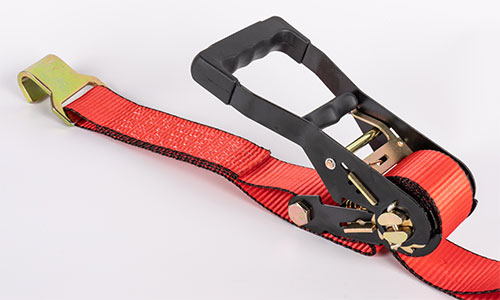
Ratchet straps, also known as tie-down straps or cargo straps, are a versatile and versatile tool. T...

News Center
  • How to Properly Use Cam Buckle Straps? The Direct Answer To properly use a cam buckle strap, wrap the webbing around or through the anchor points on your cargo, feed the loose end down through the un...

  • Is E-Track or L-Track Better? The Direct Answer There is no universal winner between the two — the better choice depends entirely on the vehicle and cargo type. E-Track Rails are generally the better...

  • Yes, You Can Use E-Track to Tie Down a Car — Here's How E-track can absolutely be used to tie down a car, provided the vehicle is secured with wheel straps or axle straps rated for the car's weight, ...

  • A properly engaged retractable ratchet strap does not come loose on its own, because the ratchet pawl locks the spool independently of the retraction spring. The auto-rewind feature only controls ho...

  • How Strong Are Cam Buckle Straps? The Direct Answer Most cam buckle straps have a break strength ranging from roughly 200 kg to over 1,500 kg, depending on webbing width, polyester grade, and buckle ...

  • What Are Cam Buckle Straps? A cam buckle strap is a cargo tie-down made of polyester webbing fitted with a spring-loaded cam buckle instead of a ratchet mechanism — you simply pull the webbing throug...

  • Threading and using a ratchet strap correctly takes less than two minutes once you know the steps. Feed the webbing up through the mandrel slot from underneath, pull it taut by hand, then pump the ra...

  • The direct answer: if your cargo tie down straps show any visible webbing damage, corrosion on the ratchet mechanism, reduced working load capacity, chemical exposure history, or are over three years...

  • Ratchet straps should be tightened until the cargo is firmly immobilised with no perceptible movement, but not so tight that the webbing digs into soft goods, distorts the load, or exceeds the workin...

  • Ratchet straps fail during transport primarily due to five causes: overloading beyond the Working Load Limit (WLL), improper routing that creates damaging contact angles, webbing degradation from UV ...

  • Quick Answer When buying tie down straps, the five features that determine whether your cargo stays safe are: Working Load Limit (WLL) and Break Strength rating, ratchet mechanism quality, webbing ...

  • Quick Answer To avoid damage when using a tie down straps set on fragile cargo, always place protective padding at every strap-to-surface contact point, choose the correct strap type for the load w...